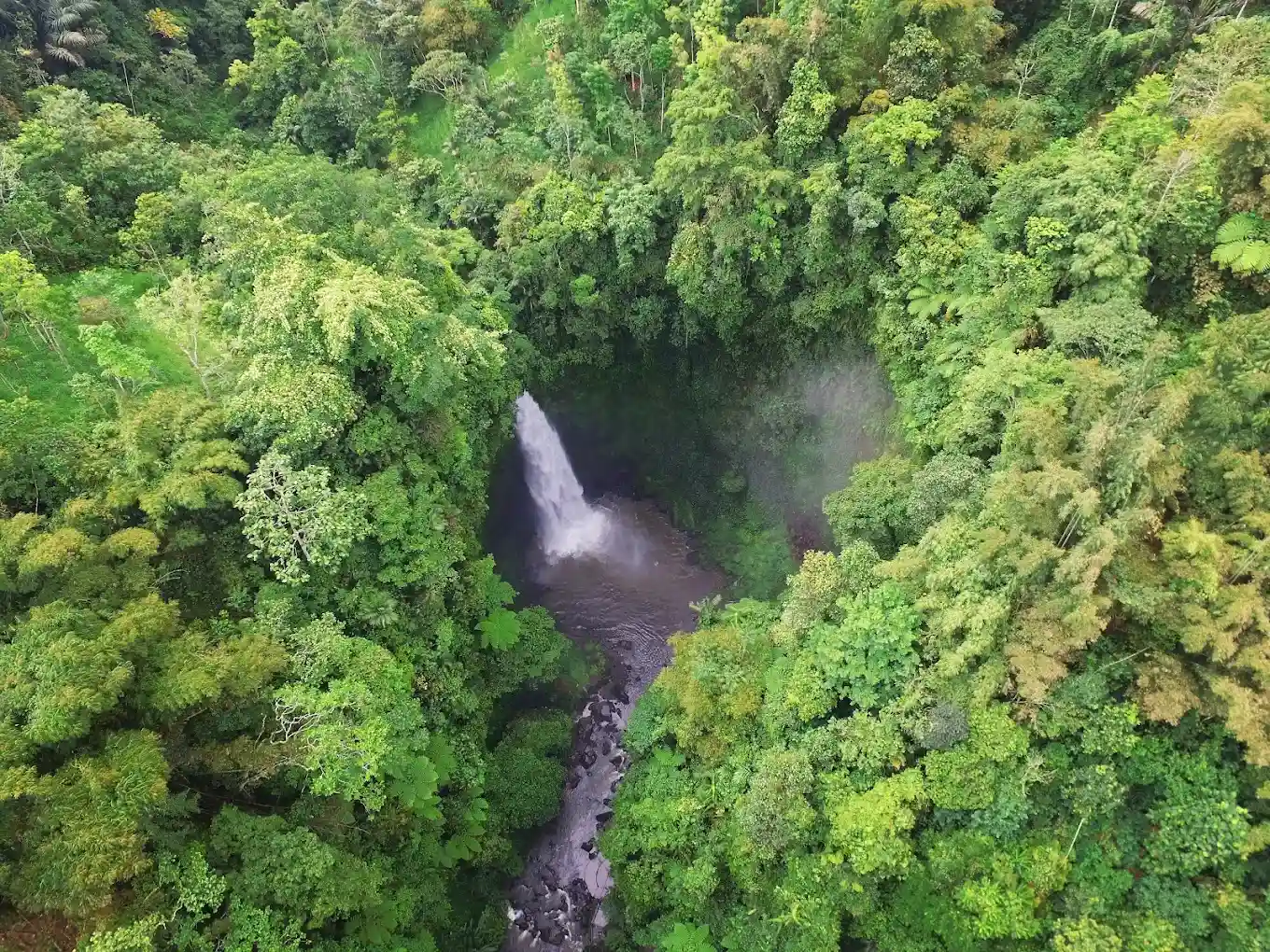
Tucked away in the lush highlands of northern Bali, Nungnung Waterfall offers a dramatic escape into nature for travellers willing to venture beyond the island’s busier tourist areas. Known locally as Air Terjun Nungnung, this towering cascade is celebrated for its sheer power, misty atmosphere, and immersive jungle setting.
If you are looking for a waterfall experience that feels raw, intense, and deeply connected to Bali’s natural landscape, this place definitely deserves a place on your itinerary. This guide covers everything you need to know before visiting, from location and access to the hike, best time to go, and practical tips.
Where Is Nungnung Waterfall Bali?
Nungnung Waterfall is located in Badung Regency, in northern Bali, surrounded by dense forest, river canyons, and rice fields. While it is less visited than waterfalls closer to Ubud, it remains accessible enough for a rewarding day trip.
From Ubud, the waterfall is approximately 30 kilometres away and takes around one hour by car or scooter. Visitors travelling from southern Bali areas such as Canggu, Seminyak, or Kuta should expect a journey of around 1 to 1.5 hours, depending on traffic conditions.
How to Get to There
Reaching Nungnung Waterfall requires private transportation, as there is no direct public transport to the site.
- By scooter: Suitable for confident riders, especially if travelling early in the morning. Roads are paved and scenic.
- By private car or driver: A comfortable option if you prefer not to ride a scooter or plan to combine the visit with other northern Bali attractions.
Once you arrive, there is a designated parking area near the entrance, along with basic facilities such as toilets and small local stalls.
Entrance Fee and Opening Hours
The entrance fee to this place is IDR 20,000 per person for foreign visitors, with an additional IDR 5,000 parking fee. Prices may change over time, so it is always wise to carry small cash.
The ticket booth generally operates between 9:00 AM and 4:00 PM. Although the waterfall itself is not gated, visitors arriving outside ticket hours are expected to pay upon exit.
The Hike to Nungnung Waterfall
Visiting Nungnung Waterfall involves a physically demanding hike, which is an important factor to consider before going.
From the entrance, visitors must descend more than 500 steep concrete steps into a deep canyon. The walk down takes around 15 minutes and is manageable for most people, though the steps can be slippery, especially after rain.
The real challenge comes on the way back up. The return climb can take 30 minutes or more and requires steady pacing and frequent breaks. While strenuous, the hike helps preserve the natural atmosphere of the waterfall by limiting crowds.
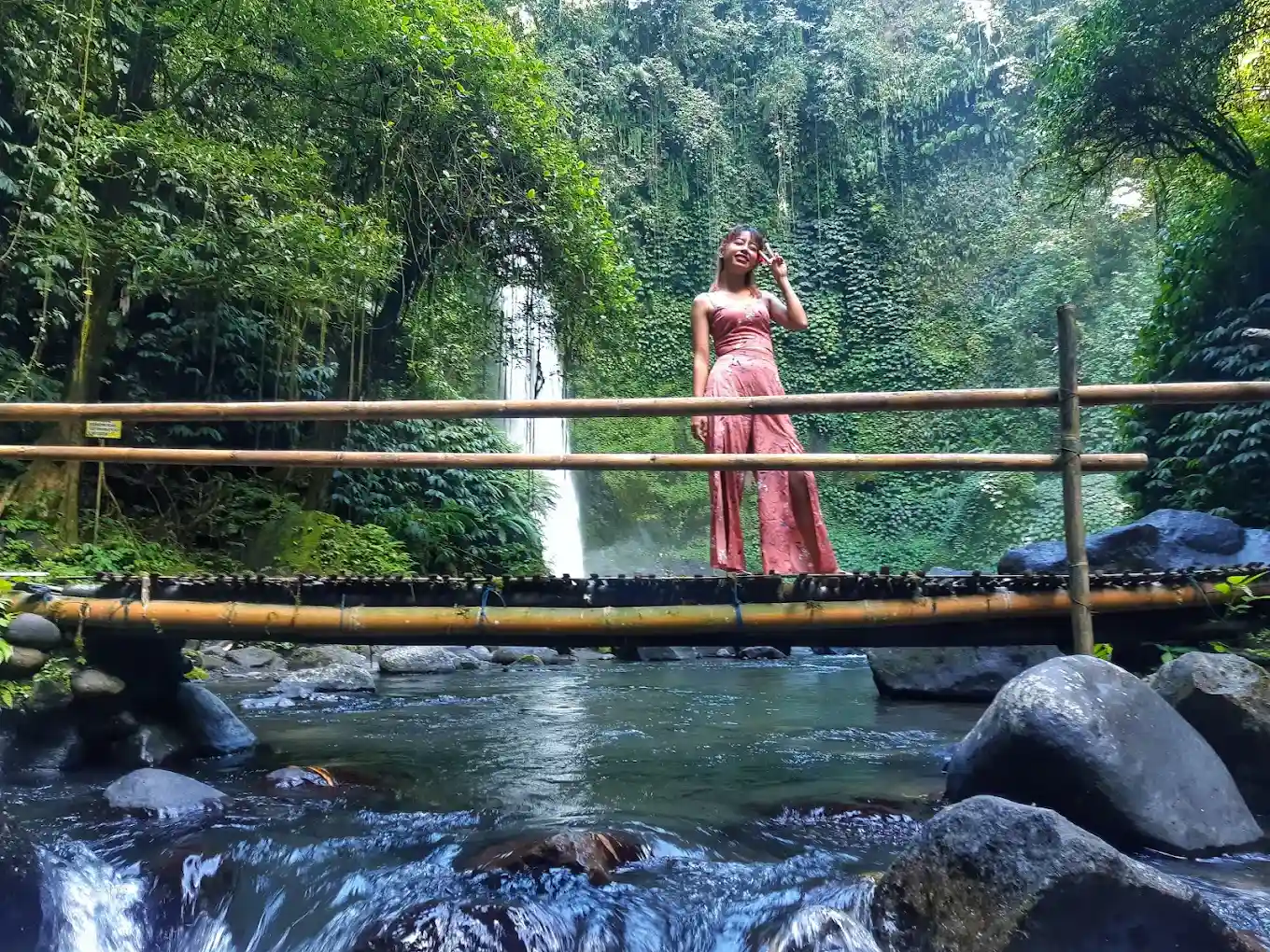
At the bottom, visitors are rewarded with a breathtaking view of the waterfall plunging from approximately 50 metres above, sending mist through the surrounding jungle.
Best Time to Visit Nungnung Waterfall Bali?
The best months to visit Nungnung Waterfall are between April and July, at the start of Bali’s dry season. During this period, the trails are safer, and the waterfall still maintains a strong flow.
The wet season, from October to March, creates a more powerful waterfall, but also brings heavier spray, slippery paths, and muddier conditions.
For the best experience, visit in the morning between 9:00 and 10:30 AM. Early hours offer cooler temperatures, fewer visitors, and beautiful natural light filtering through the mist.
Can You Swim at Nungnung Waterfall Bali?
Swimming is possible at Nungnung Waterfall, but caution is strongly advised. The water flow is powerful, and rocks around the pool can be slippery. Conditions vary depending on rainfall, so always assess safety before entering the water.
If you plan to get close to the falls or step into the pool, wearing water shoes is recommended for better grip.
Photography Tips
Nungnung Waterfall is a striking location for photography, offering both wide scenic views and dramatic close-up perspectives.
- The viewing area provides a clear angle of the full waterfall
- Morning light enhances mist and depth
- Long exposure works well if crowds are minimal
- Protect your camera from heavy water spray with a cloth or cover
Drone use is sometimes possible, but conditions can be challenging due to mist and wind.
Tips for Visiting NungNung Waterfall
Wear shoes with good grip. The stairs can be steep and slippery, especially on the climb back up. What feels easy on the way down demands more on the return.
Bring water, even if the air feels cool. The descent is shaded, but the way back is long and exposed, and a few steady sips make the climb more manageable.
Do not underestimate the sun. The jungle offers cover at first, but the upper steps are open and humid. Light sun protection can make a real difference.
Move at your own pace. Nungnung is not meant to be rushed. Pause when needed, breathe, and let the experience unfold naturally.
If it has rained heavily, consider visiting another day. The waterfall grows stronger, but the path becomes less forgiving, and safety always comes first.
Final Thoughts on Nungnung Waterfall
Nungnung Waterfall is not the easiest waterfall to reach in Bali, and that is precisely what makes it special. Its scale, raw power, and secluded atmosphere create a more immersive nature experience compared to many easily accessible waterfalls on the island. The effort required to get there adds meaning to the journey and helps preserve the sense of calm that surrounds it.
For travellers who enjoy adventure, dramatic landscapes, and quieter destinations, Nungnung Waterfall is a rewarding addition to any Bali itinerary. Take your time, move with care, respect the environment, and allow the experience to unfold without rushing.
After a day of hiking and exploration, returning to comfort becomes part of the balance. Staying at Sadara Resort Bali offers a restful contrast to the intensity of the journey, with a serene beachfront setting that invites you to slow down, recover, and reflect on the natural beauty you have just encountered.
If Bali has taught us anything, it is that the most memorable experiences often come from pairing wild moments with gentle landings.