Balinese music is one of the most distinctive cultural expressions in Indonesia. From temple ceremonies to village celebrations, music plays a central role in Balinese daily life. The rhythms, instruments, and performance styles reflect centuries of tradition, spiritual belief, and communal values that continue to shape the island’s identity today.
For travellers and culture enthusiasts, understanding Balinese music offers deeper insight into Bali beyond its beaches and resorts. This guide explores the origins of Balinese music, its traditional gamelan roots, key instruments, performance settings, and the evolution of modern music scenes across the island.
What Is Balinese Music?
Balinese music refers primarily to Balinese gamelan, a traditional ensemble-based musical form unique to Bali. Gamelan music appears in many parts of Indonesia, but the Balinese style distinguishes itself through dynamic tempos, layered rhythms, and energetic transitions.
Music in Bali is closely connected to Hindu rituals, temple festivals, and communal events. Rather than being purely entertainment, balinese music functions as a form of devotion, storytelling, and social cohesion within villages.
Traditional Balinese Gamelan Music
UNESCO recognises Balinese gamelan as part of the Intangible Cultural Heritage of Humanity, reflecting its deep cultural significance and long-standing role in Balinese society. Historical records indicate that gamelan music has existed in Bali for more than a thousand years, developing in close connection with Hindu religious rituals, temple ceremonies, and royal court traditions. Over time, this musical form has evolved while remaining an essential part of communal life across the island.
Balinese gamelan is characterised by fast-paced rhythmic patterns, interlocking melodies known as kotekan, and sudden shifts in tempo and dynamics that create a strong sense of movement and intensity. The music relies heavily on layered percussion, producing a rich and energetic sound that feels highly expressive and emotionally charged. Compared to the softer and more meditative style of Javanese gamelan, balinese music is generally more vibrant and dramatic, often building towards powerful climactic moments that captivate both performers and audiences.
Musical Scales in Balinese Music
Balinese music uses distinctive musical scales that differ from Western systems, most notably the pelog and slendro scales, each with a very recognisable sound character. In Balinese practice, the pelog scale is commonly vocalised as ndang, ndung, ndeng, ndong, nding, a five-tone system that produces a bright, tense, and expressive sound. The uneven spacing between notes gives pelog its dramatic quality, where certain tones feel more prominent and emotionally charged. According to Balinese music theory documented by ethnomusicologists such as Michael Tenzer and Colin McPhee, pelog can be expanded into slendro by adding intermediary tones known as leung and leong, allowing the scale to move toward a more evenly spaced structure.
The slendro scale, often compared to the Western do–re–mi–fa–sol–la–si–do for ease of understanding, consists of tones that feel more balanced and fluid to the ear, though it does not follow Western pitch accuracy. Its sound is smoother, more open, and gently flowing, creating a hypnotic and meditative atmosphere. When performed in a gamelan ensemble, both scales produce a shimmering and pulsating sonic effect due to intentional tuning differences between paired instruments. Locals call this acoustic phenomenon ombak (wave), and it gives Balinese music a living, breathing quality while reinforcing the idea that artisans craft each gamelan set as a unified whole rather than a mix of interchangeable instruments.
Musical Instruments Used in Balinese Music
Balinese music relies on a wide range of traditional instruments, each with a clearly defined role within the ensemble. Rather than performing individually, these instruments work together in carefully structured layers to create the distinctive sound of balinese music.
Gong
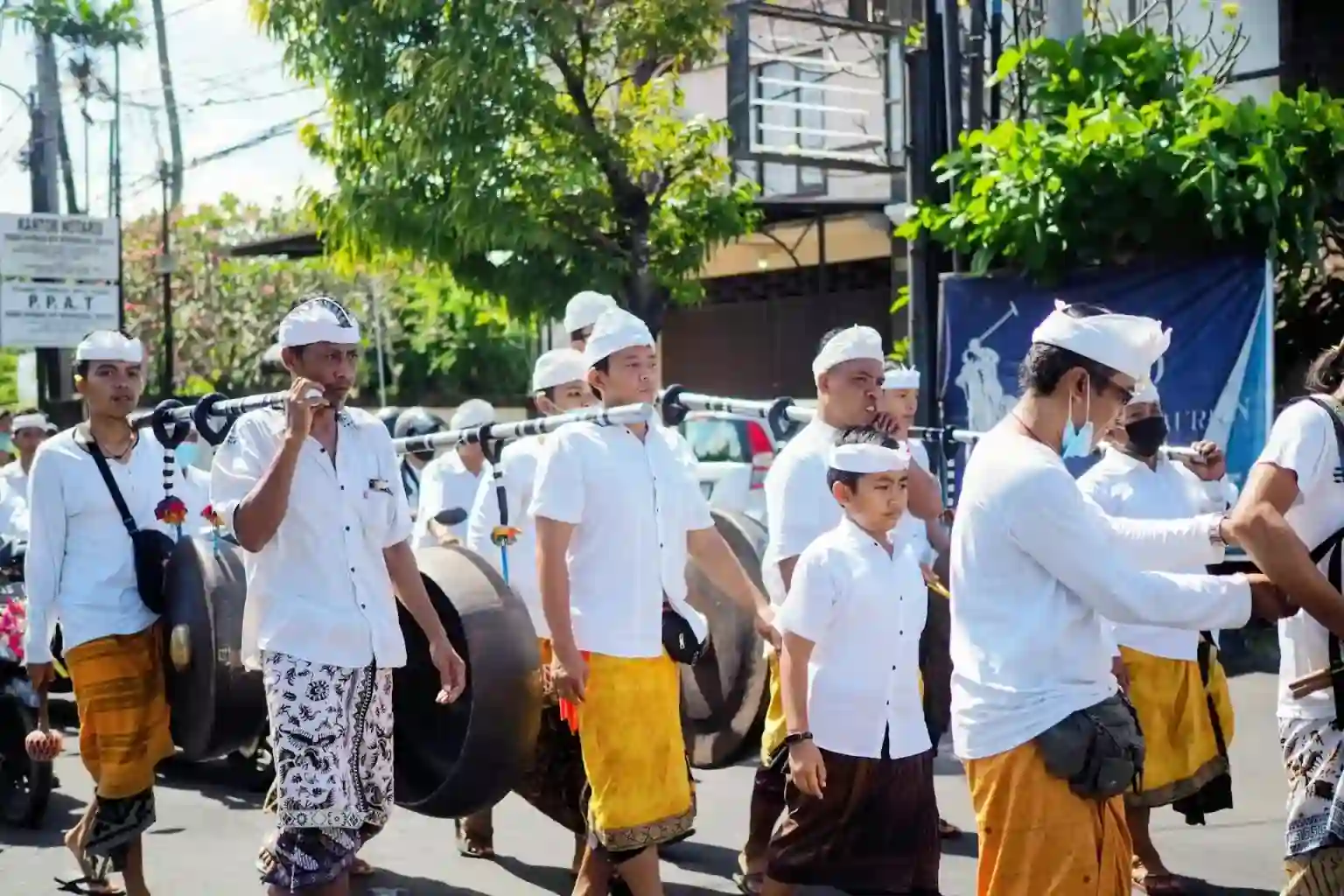
The gong serves as the structural foundation of balinese music. Large hanging gongs signal key moments in the musical cycle, guiding musicians through the structure of the piece. These signals indicate transitions, endings, and the return to the main rhythmic pattern.
Beyond musical performance, gongs play an important role in Balinese daily life. They are commonly used in temples and village spaces to announce ceremonies, communal gatherings, and important events. The deep resonance of the gong symbolises balance and order, reflecting its role in guiding both music and community rhythm.
Kendang (Drums)
Kendang are hand-played drums that control tempo, dynamics, and transitions within a gamelan ensemble. The kendang player often acts as the musical leader, signalling changes in speed or mood to both musicians and dancers.
Mastering the kendang requires years of practice, as players must combine precise hand techniques with strong awareness of choreography and ensemble cues. Different sizes of kendang produce varied tones, allowing the drummer to shape the energy of the performance, from calm ceremonial passages to intense, fast-paced sections.
Ceng-Ceng
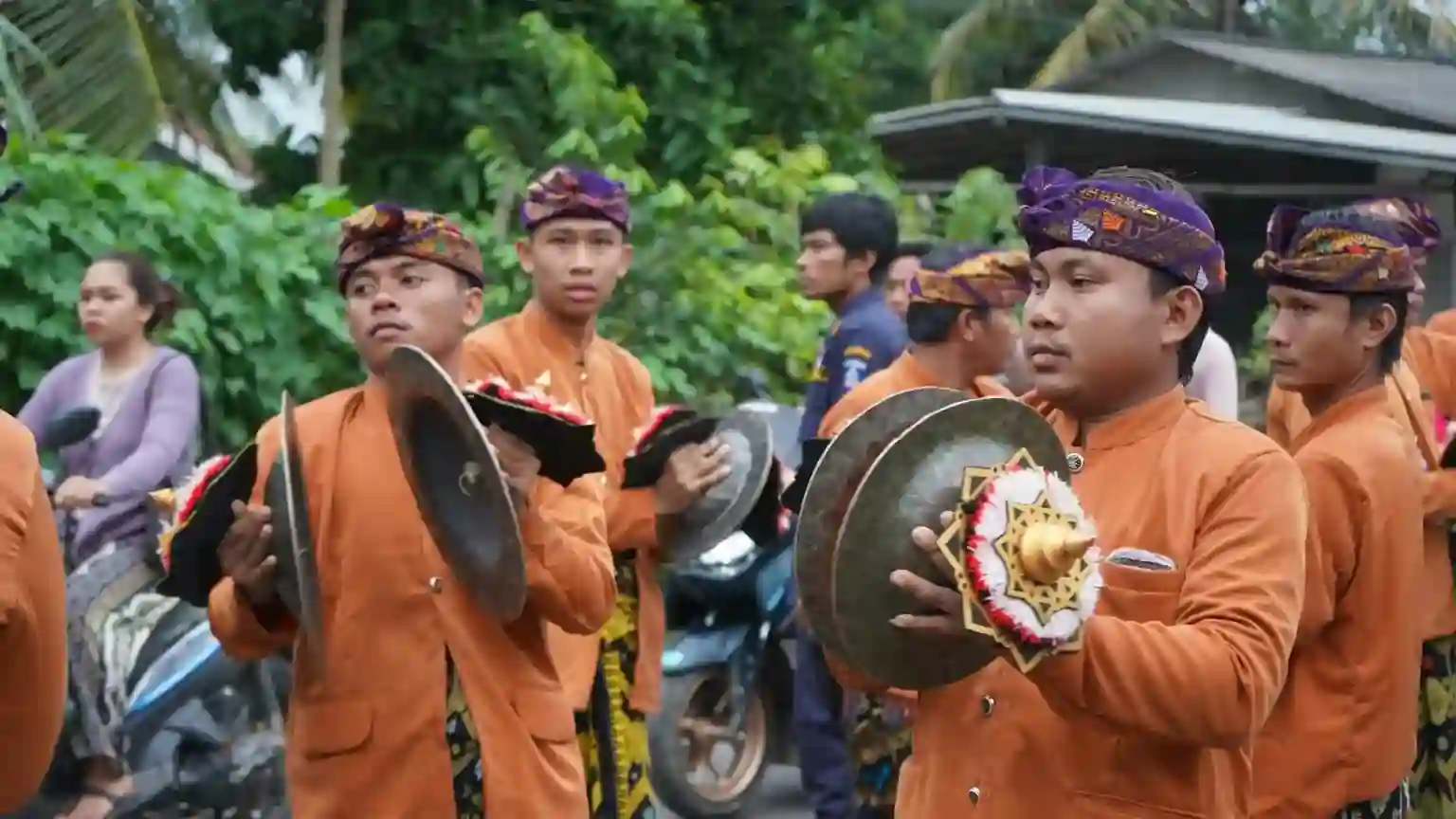
Ceng-ceng are small metal cymbals mounted on a wooden frame or held by hand. They produce sharp, bright sounds that add rhythmic complexity and emphasis to balinese music.
These cymbals are especially prominent during fast sections, where rapid interlocking patterns create a sense of excitement and urgency. The precise timing required to play ceng-ceng highlights the cooperative nature of gamelan, as players must maintain perfect coordination with the rest of the ensemble.
Suling (Bamboo Flute)
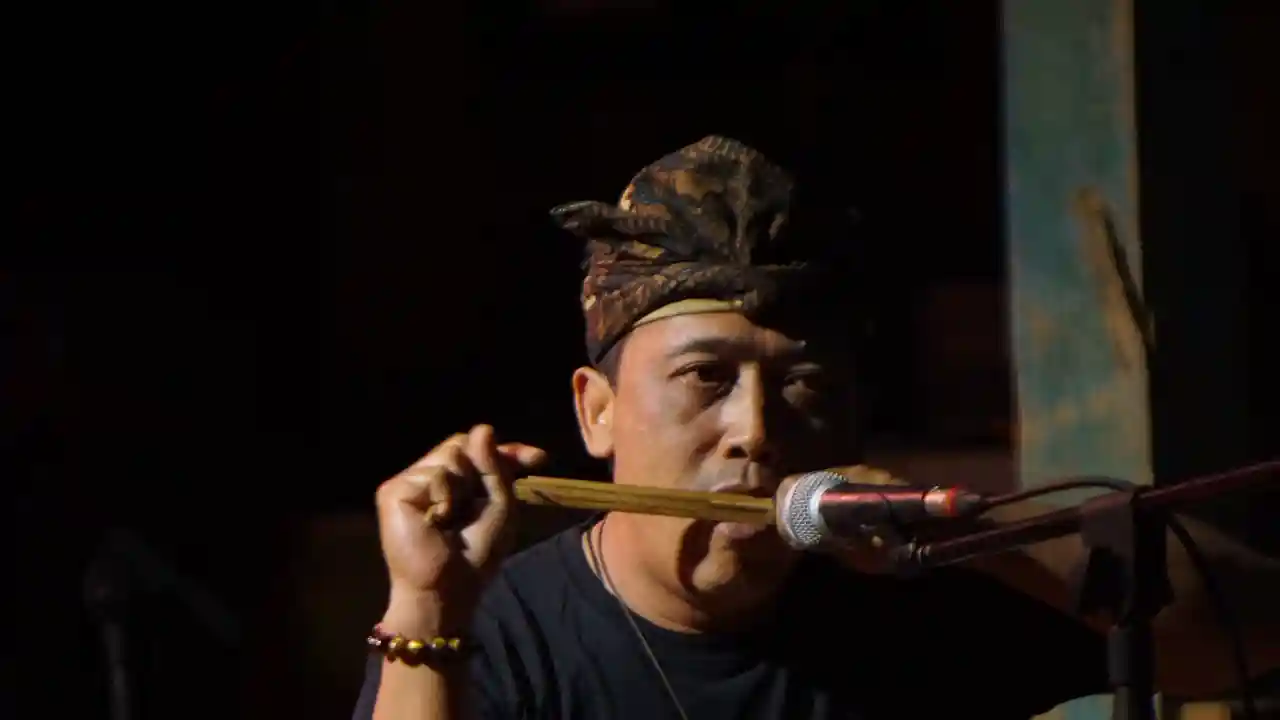
The suling provides melodic contrast within Balinese music, balancing the strong percussive elements of the ensemble. Made from bamboo, the flute produces soft, flowing tones that often mirror the emotional atmosphere of a performance.
Balinese suling players use circular breathing techniques, allowing them to sustain long phrases without pausing for breath. This skill enables continuous melodic lines that weave gently through the layered rhythms, adding expressiveness and depth to the overall sound.
Rindik
Rindik instruments are bamboo xylophones commonly used in smaller ensembles or informal settings. They consist of multiple bamboo bars suspended over a frame and struck with mallets to produce warm, resonant tones.
Rindik music often accompanies welcoming performances, cultural events, and relaxed gatherings. Compared to larger gamelan ensembles, rindik creates a lighter and more melodic atmosphere, making it accessible and enjoyable for first-time listeners of Balinese music.
Genggong
The genggong is a bamboo mouth harp that produces subtle, vibrating tones through controlled breath and mouth movement. Although less commonly featured in large ensembles, it plays a unique role in traditional Balinese music.
Players manipulate airflow and vocal resonance to create variations in pitch and rhythm. The genggong adds texture to intimate or folk-style performances and highlights the experimental, expressive nature of Balinese music.
Where to Experience Balinese Music in Bali
Live performances remain one of the best ways to appreciate Balinese music. Many locations across the island host regular gamelan shows.
Ubud
Ubud is considered the cultural heart of Bali. Visitors can watch nightly gamelan and dance performances at venues such as Ubud Palace and nearby temples. Rehearsals are also common in village halls, offering a more informal experience.
Temples and Village Ceremonies
Temple festivals provide authentic contexts for Balinese music. Performances here are part of religious rituals rather than staged entertainment, offering insight into the spiritual role of music.

Cultural Workshops
Some cultural centres allow visitors to learn about balinese music directly by trying instruments and observing musicians at work. These workshops help explain the structure and meaning behind the performances.
Modern Music in Bali
Alongside tradition, Bali also supports a growing modern music scene. Younger musicians blend traditional balinese music elements with contemporary genres, creating new forms of expression.
Punk, Hardcore, and Alternative Scenes
Bali has an active underground scene, particularly in punk and hardcore music. Local bands perform regularly at small venues, reflecting youth culture and social commentary.
Electronic and Fusion Music
Electronic music is popular in beach clubs and nightlife venues across Bali. Some artists incorporate gamelan-inspired rhythms or traditional instruments into electronic tracks, bridging cultural heritage and modern soundscapes.
Contemporary Balinese Artists
Several Balinese musicians create instrumental and fusion music rooted in tradition while appealing to global audiences. These works often highlight gamelan patterns adapted for modern compositions.
Enjoy Balinese Music with a Thoughtful Place to Stay
Experiencing Bali music becomes even more meaningful when paired with a stay that reflects the island’s calm and cultural rhythm. Staying in a peaceful coastal setting allows you to enjoy traditional performances during the day and unwind in comfort afterward.
At Sadara Resort Bali, guests can enjoy a relaxed beachfront atmosphere in Tanjung Benoa while remaining within easy reach of cultural hubs, temples, and local performance venues. Whether you spend your day exploring gamelan performances or simply listening to the natural sounds of the ocean, Sadara Resort Bali offers a setting that complements the reflective and harmonious spirit of Balinese music.
By combining cultural exploration with a thoughtfully chosen stay, your time in Bali can feel both enriching and unhurried.