
Making Boreh
A TRADITIONAL BALINESE HERBAL SCRUB
Ancient Roots:
This herb has been part of Balinese healing traditions for centuries. It originated in rural Balinese communities, particularly among farmers and labourers who worked long hours in the rice fields. After a full day of physical labour, these workers would apply boreh to warm their bodies, relieve joint pain, and prevent colds or flu caused by damp and cold weather. Especially in the mountain regions of Bali.
Traditional Medicine Boreh:
Balinese healing practices draw heavily from Usadha, a traditional medical system passed down through generations. Usadha blends herbal remedies, spiritual rituals, and bodywork to maintain physical and spiritual harmony. Local healers and village elders traditionally prepared Boreh using herbs and spices from their surroundings. Each village created its own unique recipe based on local knowledge and the ingredients they could source.
Sacred and Ritual Use:
Beyond daily use, this herb was also used in ritual purification and healing ceremonies. In traditional Balinese Hindu culture, physical health is closely linked with spiritual well-being. Applying boreh was seen not only as a way to care for the body but also to harmonise with nature and protect oneself from negative energies or illness.
Making Boreh Based on Family Tradition:
Knowledge of how to make and use herbs was often passed down within families, especially from mothers or grandmothers to daughters. Each family might have their own special recipe with unique blends of spices. This made boreh both a medicinal and cultural inheritance.
Revival in Modern Times:
The rise of wellness tourism and the growing interest in natural remedies have brought Boreh back into the spotlight. Many Balinese spas and wellness centres now include traditional herbs in their holistic body treatments. Yet in many villages, people still prepare homemade Boreh by hand, keeping the tradition alive in their daily lives.
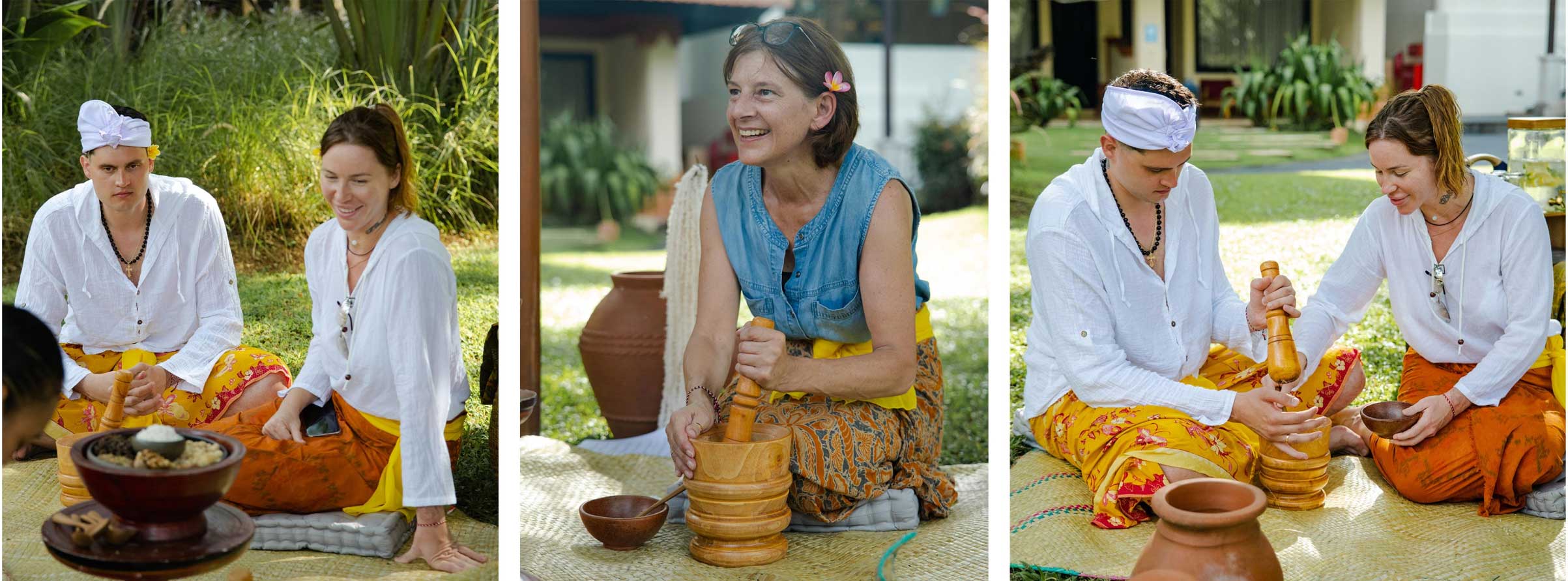
INGREDIENTS FOR MAKING BOREH
The ingredients can vary slightly, but a basic boreh recipe often includes:
Turmeric – anti-inflammatory, brightens the skin
Ginger – warms the body, relieves muscle tension
Galangal – boosts circulation
Clove – antibacterial, gives a warming effect
Cinnamon – improves blood flow
Rice or rice powder – acts as a natural exfoliant
Water or coconut oil – used to form a paste
All ingredients are natural and possess medicinal properties, commonly used in traditional Balinese healing practices.
STEPS TO MAKING BOREH
Prepare the Ingredients Before Making Boreh
Wash and peel fresh roots like turmeric, ginger, and galangal.
Dry spices like cloves and cinnamon can be ground with a mortar and pestle or blender.
Grind into a Paste:
Mix all ingredients together and grind into a thick, fragrant paste.
Add a little warm water or coconut oil until the mixture reaches a spreadable consistency.
Application:
Apply the boreh paste evenly over the body, especially on tired muscles or cold areas.
Leave it on for about 20–30 minutes. The paste will create a warming effect on the skin.
Rinse Off:
After the paste dries, gently rinse it off with warm water.
Skin will feel soft, warm, and revitalized.