Denpasar, the capital city of Bali, is often seen as a busy administrative hub filled with markets, government offices, and daily urban life. Yet behind its modern rhythm lies a deeply layered and complex past. This history of Denpasar are stretches back over a thousand years, shaped by ancient kingdoms, Majapahit influence, colonial encounters, and acts of resistance that still define Balinese identity today.
Understanding the history of Denpasar is essential for anyone who wants to see Bali beyond its beaches and tourism image. The city reveals a more grounded, everyday side of the island where tradition and modern life coexist in subtle but powerful ways. So, keep on reading to learn more about this.
Ancient Roots in the History of Denpasar
Long before it became a city, the region around it was already part of an organised civilisation. Evidence of early settlements can be traced back to ancient inscriptions, including the famous Blanjong inscription in nearby Sanur dated 913 AD. These records suggest that early societies in the region were already involved in governance, trade, and spiritual practices.
This city gained greater regional importance after the arrival of the Majapahit Empire in 1343. This powerful Javanese influence helped shape Bali’s political structure and cultural identity. Under Majapahit’s influence, Bali was divided into several regional kingdoms, including the area that would later become Badung, the predecessor of modern Denpasar.
This period laid the foundation for temple architecture, royal systems, and cultural traditions that still exist in Denpasar today.
Royal Kingdoms and the Rise of Badung
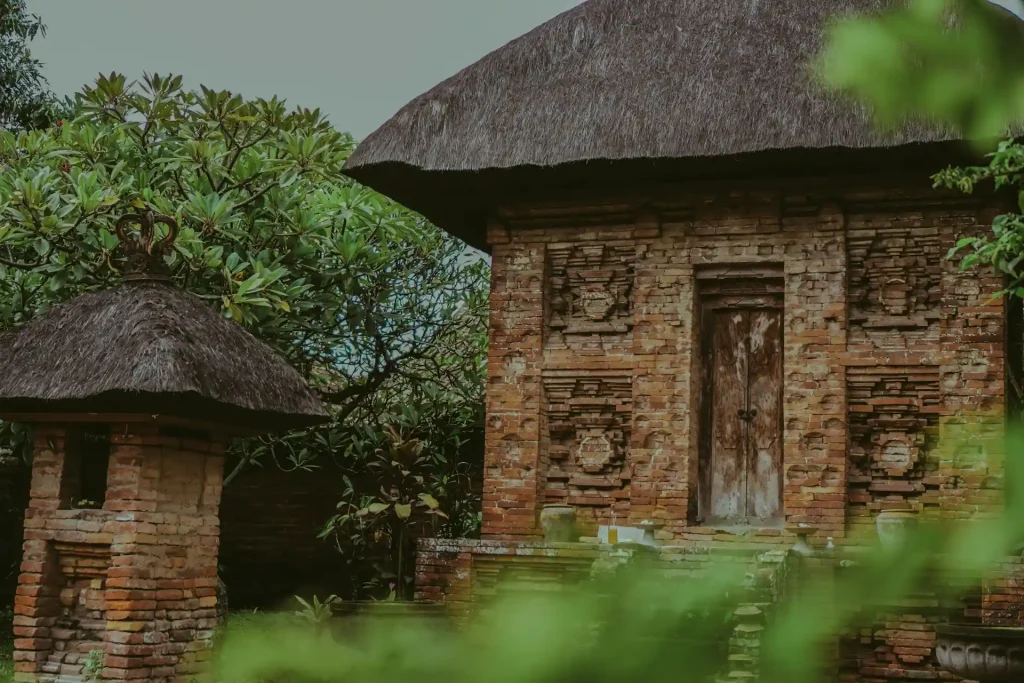
A major chapter in this tale of Denpasar is the rise of the Badung Kingdom. From the 14th century onward, this region developed as an important political centre in southern Bali. One of the most significant historical remnants from this era is Pura Maospahit, a temple strongly influenced by Majapahit architecture.
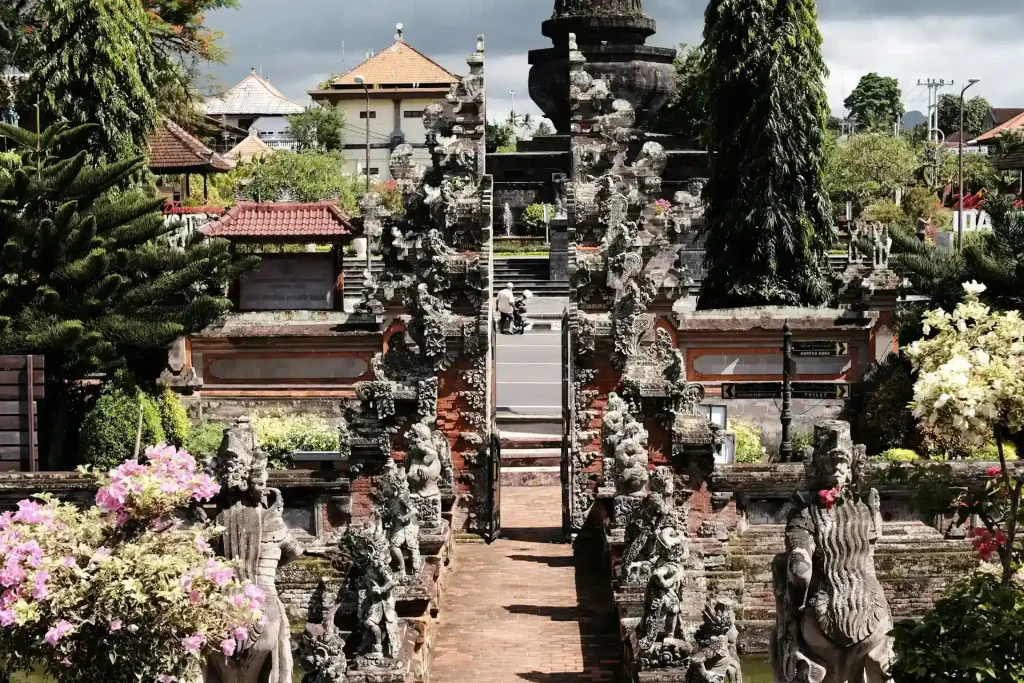
Built using distinctive red brick structures and featuring classic gateways like the candi bentar and kori agung, the temple reflects deep cultural links between Bali and Java. It is also associated with legendary figures such as Kebo Iwa, further enriching its mythological importance.
By the late 18th century, power shifts within the region led to the rise of a new royal seat: Puri Agung Denpasar. This palace became the centre of governance for the Badung Kingdom under I Gusti Ngurah Made Pemecutan. It was during this time that the name “Denpasar” emerged, derived from the Balinese words den (north) and pasar (market), meaning “north of the market.”
Colonial Encounters and the Puputan of 1906
One of the most defining moments is the Dutch colonial invasion in the early 20th century. By this time, the Dutch had already established control over parts of northern Bali and were expanding southward.
In 1906, Dutch forces entered Denpasar and demanded submission from the Badung Kingdom. What followed became one of the most tragic and symbolic events in Balinese history: the Puputan Badung.
Rather than surrender, the royal court and many of its followers chose ritual mass suicide in a final act of resistance. The king and his people marched toward the Dutch forces dressed in ceremonial white, accepting death over colonial rule. An estimated thousand people lost their lives, and the royal palace was destroyed.
This event is still remembered as a defining expression of Balinese dignity and resistance. Monuments in Puputan Square today continue to honour this sacrifice, ensuring that this chapter of the story is never forgotten.
Colonial Development and the Growth of a Trading City
Following the Dutch takeover, Denpasar gradually transformed into an administrative and commercial centre. Unlike other colonial cities, this city in particular did not develop a heavily European architectural identity. Instead, it evolved around existing Balinese and multicultural trade networks.
One of the key developments was the establishment of Pasar Badung, which grew into the largest traditional market in Bali. Surrounding it, Jalan Gajah Mada became the city’s main commercial artery. Even today, this street reflects a unique blend of Balinese, Chinese, and Indian trading communities.
A notable landmark in this area is Bali Hotel Denpasar, originally built in 1925. It became one of the first formal hotels in Bali and welcomed a number of international figures, marking the early stages of tourism development on the island. Its colonial-style architecture remains a rare example of that era in this city.
This phase of development shows how Denpasar shifted from royal governance to trade and urban functionality under colonial influence.
Cultural Identity and Everyday Life in the Modern Era
Despite its rapid urbanisation, Denpasar has retained strong cultural roots. Temples, ceremonies, and rituals are not staged for tourism but remain part of everyday life. This makes the city feel different from Bali’s coastal resort areas.
Markets such as Pasar Badung and Pasar Kumbasari continue to serve as vital spaces for local life. They are not just places of commerce but also social hubs where tradition and modern needs intersect.
The history of Denpasar is therefore not only preserved in monuments or museums but is actively lived by its residents. The city reflects Bali’s broader identity: adaptive, resilient, and deeply spiritual.
Why Denpasar’s History Still Matters Today
This short history lesson offers more than a timeline of events. It reveals how culture, resistance, and adaptation shape a city’s identity over centuries. From ancient kingdoms to colonial resistance and modern urban growth, Denpasar stands as a living archive of Balinese history.
For visitors, exploring this city provides a different perspective of Bali. It is not just about beaches or luxury tourism but about understanding the roots of the island’s cultural and political evolution.
Experience the Living History of Denpasar
Learning about this city’s past is a journey through time, from ancient inscriptions and royal kingdoms to colonial struggles and contemporary urban life. Each layer adds depth to the city’s identity, making it one of the most historically significant places in Bali.
For those who wish to experience a more peaceful and reflective side of the island after exploring the city’s historical landmarks, a stay at Nusa Dua Resort offers the perfect balance. Nestled along the coast, it provides a calm retreat where you can unwind and reflect on the cultural richness of Bali’s capital.
Denpasar may not always appear on the typical tourist map, but its history tells a story that is essential to understanding Bali itself.