
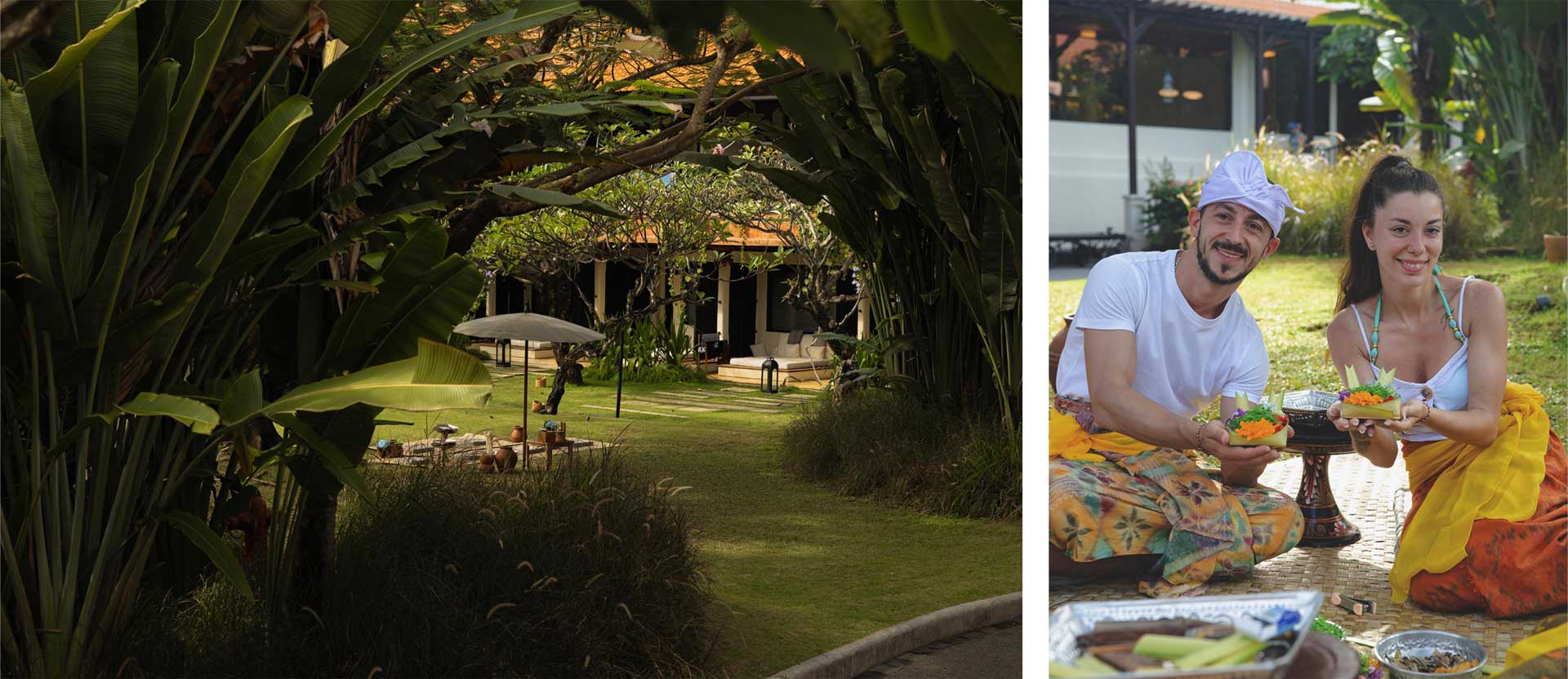
Canang Sari Offering
WHAT IS CANANG SARI ?
Canang sari is one of the most important and recognizable daily offerings in Balinese Hinduism. It is a small hand-made offering made of palm leaves, flowers, and symbolic items, presented to the gods as a sign of gratitude and devotion. You can find canang sari placed in temples, shrines, family compounds, on the ground, and even in vehicles or shops across Bali. The name comes from “Canang”: a small tray or container made from coconut or palm leaves. “Sari”: means “essence,” referring to the essential offerings like flowers and scents placed inside.
HOW TO MAKE CANANG SARI
Materials:
- Janur (young coconut or palm leaves):
Used to weave the small tray or base. - Flowers:
Each flower color and placement has symbolic meaning:- White (East – Iswara) – symbolizes purity
- Red (South – Brahma) – symbolizes energy
- Yellow (West – Mahadeva) – symbolizes prosperity
- Blue/Green (North – Vishnu) – symbolizes harmony
- Lime, betel nut, and gambier (optional):
Traditional symbols of life. - Incense (Dupa):
Burned during prayer to carry the essence to the divine. - Money or coins (optional):
A symbol of self-sacrifice (Yadnya), especially in ceremonial offerings
Steps:
- Weave the base (canang) using strips of palm leaves into a small square or round tray.
- Arrange the flowers neatly according to color and direction.
- Add sari items like betel nut, lime, or coins.
- Place incense on the top, and offer it with prayer, usually in the morning or evening.
CULTURAL AND SPIRITUAL SIGNIFICANCE
Canang sari is more than just decoration—it’s an act of devotion and daily ritual that reminds Balinese Hindus to live with balance, gratitude, and respect for the gods and spirits. It expresses the Tri Hita Karana philosophy, which teaches the harmony between:
- Humans and God (Parahyangan)
- Humans and nature (Palemahan)
- Humans and other people (Pawongan)
By offering canang sari, the Balinese are not asking for something, but giving thanks for the blessings they have received
HISTORY OF CANANG SARI
The tradition of canang sari has roots in ancient Hindu practices, brought to Bali from India over a thousand years ago through the process of Indianization. However, canang sari as it is practiced today is a uniquely Balinese development—blending Hindu ritual philosophy with local customs, materials, and beliefs.
Historically, the creation of offerings was a sacred duty performed mostly by women in the household, passed down through generations. It also became a daily spiritual discipline—meditative and artistic in nature.
Over time, canang sari became a symbol of Balinese cultural identity, representing the island’s deep spirituality, artistic skill, and harmonious way of life.
IN SUMMARY
Canang sari is a simple yet profound daily offering that embodies Balinese values of gratitude, balance, and devotion. Making it is both a religious ritual and an expression of beauty and mindfulness, deeply tied to the island’s spiritual history and living tradition.